Innovative Media Professionals

For chiropractic practices that measure every marketing dollar

See Exactly Where Your Practice Shows Up On GoogleAnd What It’s Quietly Costing You In New Patients — In 3 Minutes Or Less

Most practices watch their ad numbers closely — while Maps, AI Overviews and Local Services Ads quietly decide who gets the call.

Or first, see how Google decides which practice gets the patient.

Your Local Visibility Checkup

Your speed score from Google, a 12-point site audit, whether the AI tools can read you, and a live map of where you actually rank across your city. No signup, no email, no call.

Step 1 of 4

How fast is your site?

Run through Google’s own PageSpeed API on a simulated phone. Not our opinion of your site: Google’s.

One phrase, the way a patient types it — chiropractor, back pain doctor, sports chiropractor.

What this has done for a clinic

Share of local voice 15% → 77% in five months

A 413% increase on its main service term, average rank 6.83 → 2.67, and calls up 50.6% over the same five months. Same practice, same city, same doctors.

What this is not

No pitch inside the results

No signup, no email required, no surprise phone call. You get your numbers and a plain-English explanation of what they mean. If you decide you want help acting on them, there is a link at the end — that is the only ask.

Top of funnel to bottom of funnel

Nobody wakes up and types “chiropractor near me”

They hurt for a while first. They read, they ask, they compare, and only then do they search to book. By that last search, most have already picked the two or three names they trust. Here is what they type at each stage, and what has to be true for you to still be on that list.

  1. 1

    Top of funnel

    Just hurting

    Something hurts. They do not know what it is yet, and they are not looking for you.

    What they type

    • why does my lower back hurt
    • pinched nerve or muscle strain
    • neck pain from my phone
    • is sciatica serious

    How you convert them

    • GBPAnswer the question as a profile post and Q&A, so Google has something of yours to quote.
    • OrganicBlog the same question. This is what gets you named in Reddit threads and AI answers later.
    • LSASpend nothing here. Nobody is ready to book, so every lead you buy is one you lose.
  2. 2

    Middle of funnel

    Comparing options

    They accept they need a professional. Now they are deciding what kind, and who.

    What they type

    • chiropractor vs physical therapy
    • is a chiropractor safe
    • how much does it cost
    • best chiropractor near me

    How you convert them

    • GBPReviews and current photos decide this stage. 200 reviews beats a better clinician with 12.
    • GBPList every condition you treat. 'Do they even handle sciatica' loses the patient silently.
    • LSAThe Google Screened badge is a check mark from Google, and it lands before they read a single review.
  3. 3

    Bottom of funnel

    Ready to book

    They want an appointment, today if possible. This is the search you are already fighting over.

    What they type

    • chiropractor near me
    • chiropractor open now
    • walk in chiropractor
    • takes my insurance

    How you convert them

    • LSASits above the map and charges per lead, not per click. The one slot you can buy at the moment they book.
    • GBPThe top three get a Call button on screen. Position four is not a smaller slice, it is no calls.
    • BothHours, phone and booking link must be right, or every 'open now' search filters you out.

72% of people look at three or fewer businesses before they choose one, and only 1% look at more than ten. BrightLocal, 1,227 US consumers, 2026

That is why stage 1 and stage 2 matter. Most practices only pay for stage 3, then wonder why the cost per patient keeps climbing.

How local visibility benefits your practice


Every benefit matched to the stage it actually delivers, so nothing gets lost between the strategy and the result.

The four inputs at the top are the work. Everything below them is what that work produces, in the order it produces it.

Funnel diagram. Four traffic sources feed in at the top, then four stages narrow toward revenue. The stages and their contents are listed in full below this image.

What the funnel diagram shows

Traffic sources feeding the funnel:

  • GBP optimization
  • Citations & listings
  • Review generation
  • AI search readiness

Awareness

  • More visibility in local search
  • Higher-quality qualified traffic
  • Voice & AI search visibility
  • Stronger online reputation

Get found by nearby patients actively searching

Interest

  • Complete Google Business Profile
  • Consistent name, address & phone
  • Schema markup for AI citation
  • Photos, posts & service listings

Build trust before the first click

Consideration

  • Genuine patient reviews
  • Improved conversion rates
  • More calls, visits & inquiries

Convert visibility into calls, visits and inquiries

Revenue

More calls, more patients, more revenue — without paying per click for every lead

How Google Decides Which Practice Gets The Patient

Four things decide whether a new patient ever sees your clinic. None of them appear in your ad dashboard. Here is the number attached to each one.

This Is The Map Pack

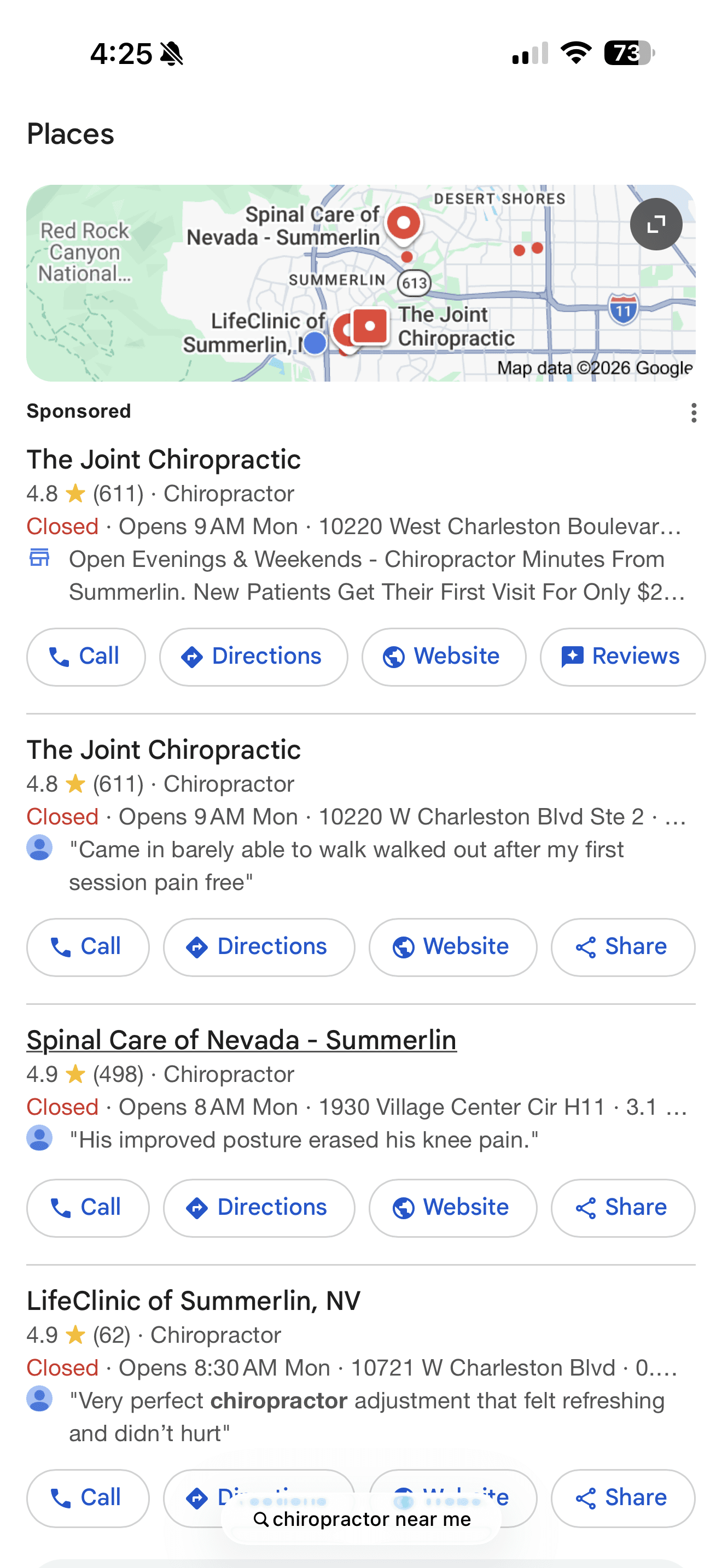
This is an actual phone, running an actual search. Google shows a map, then three practices — each with a Call button right there. That block is the Map Pack.

Almost every new patient picks from those three. Position four doesn’t get a smaller share of the calls — it mostly doesn’t get called.

Notice the Sponsored result sitting above all of it. That practice is paying for the spot. The three below it are not — they earned it, and they keep it whether or not they top up a budget.

A phone screenshot of a Google search for 'chiropractor near me' in Summerlin, Las Vegas. A map sits at the top, then a Sponsored listing, then three chiropractic practices — each with a star rating, review count, opening hours and Call, Directions and Website buttons.
A real search for “chiropractor near me”. One paid slot, then three practices — and then everybody else. Map data ©2026 Google.

What Is a GeoGrid (And Why It Matters)?

It’s a map of your city covered in colored dots. Each dot is a real spot, and the number is where you rank when someone searches from exactly there.

Look at the shape. This practice is #1 at its own front door, 2s and 3s a few blocks out, single digits across town, and 20+ by the county line. Your results change with the searcher’s location — the further away they are, the less you show up.

That fade is the default. It’s what happens to every practice that hasn’t done something specific to earn the Map Pack beyond its own neighborhood.

40–42%

The Map Pack takes 40–42% of every click on a local search page — and it shows up on more than 90% of simple local searches like “chiropractor near me”.

Sources: Search Engine LandDataPinsSearchLab
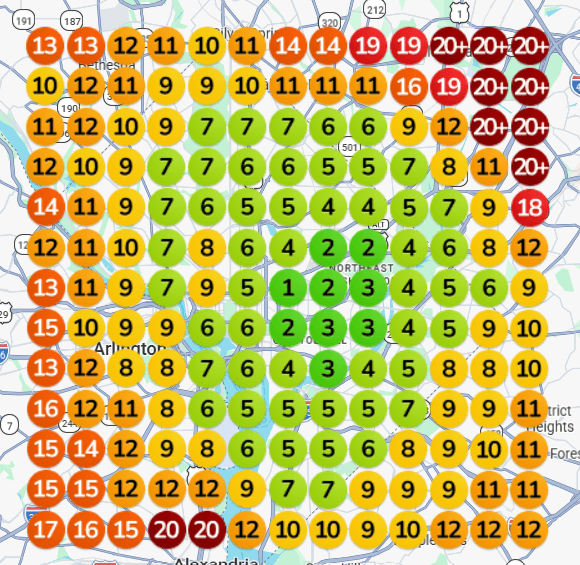
A GeoGrid covering a whole metro area. At the center the business ranks 1, 2 and 3, shown in green. Moving outward the ranks climb through 4 to 8 in yellow-green, then 9 to 15 in orange, and reach 20 or worse in dark red at the outer edges of the map.
Top 3 — you get the callPage one, barelyNot showing

AI Overviews: Google’s New Front Door

Good news first: when someone types “chiropractor near me”, the Map Pack still wins — AI barely shows up. The shift happens earlier than that.

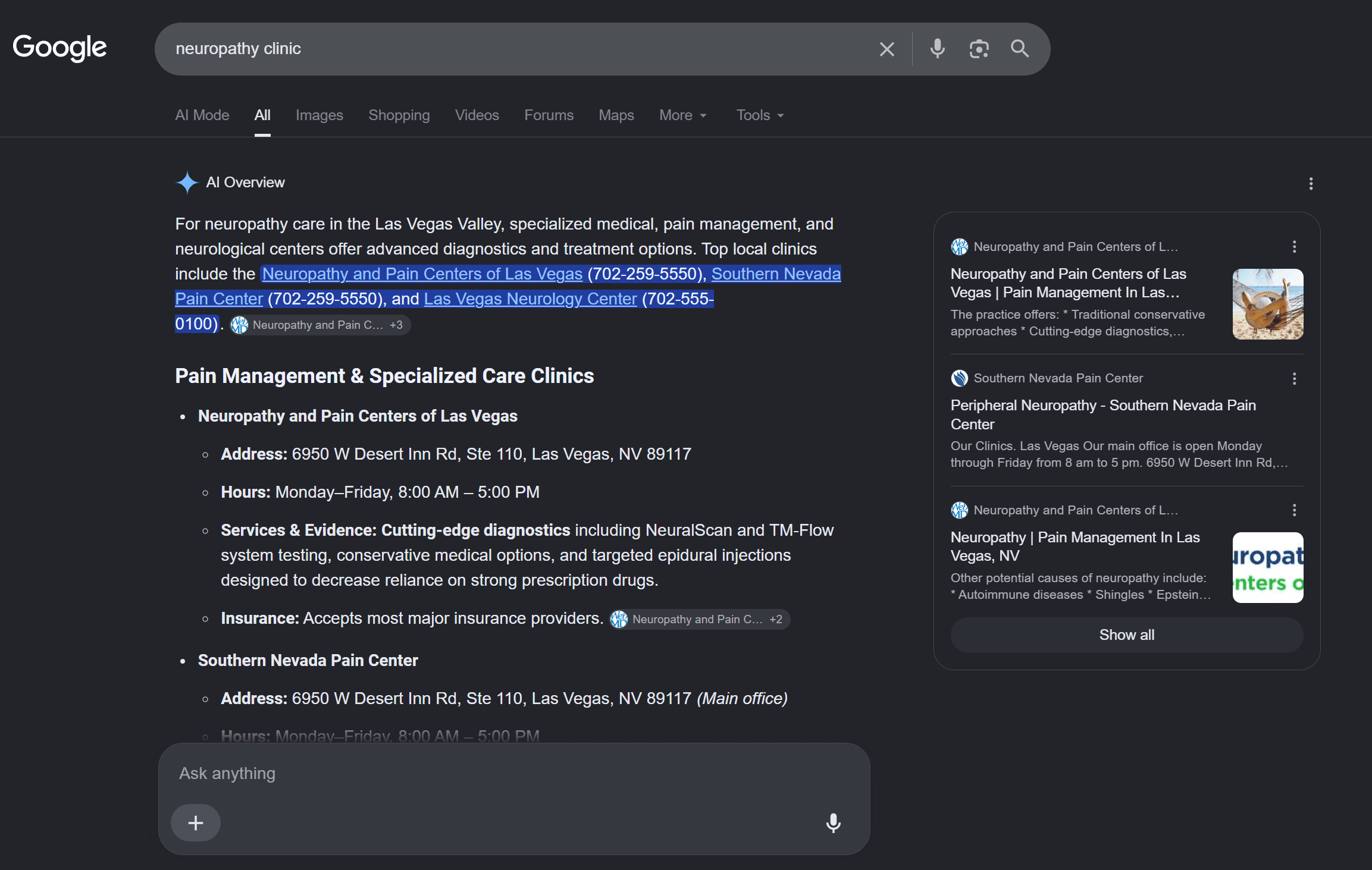
Ask the question a patient in pain actually asks — “who is the best chiropractor for neuropathy in las vegas” — and Google answers it itself. Below, it named three practices and described what each one treats, right down to the equipment they use. Every other clinic in that city is not in the answer at all.

Nobody paid for those three spots. Google chose them because it understands what they treat and recognizes them as real, established local practices. That is what being “findable” means now — and it is decided long before anyone searches your name.

15% → 92%

AI Overviews show on just 15% of simple “near me” searches — but on 92% of the research questions patients ask first, like “how much does an adjustment cost”.

Sources: Search Engine LandWhitespark

A Google AI Overview for the search 'neuropathy clinic'. The AI writes its own answer naming three clinics with their phone numbers inline: Neuropathy and Pain Centers of Las Vegas, Southern Nevada Pain Center, and Las Vegas Neurology Center. Below that it lists each clinic's street address, opening hours, the specific diagnostics and treatments it offers, and whether it accepts insurance, with source cards alongside.
A real AI Overview for “neuropathy clinic”. Look at what the answer already contains: three clinics, their phone numbers, addresses, hours, treatments and insurance. The patient has everything they need to call without visiting a single website, and every other clinic in the city is simply not part of the answer.

Local Services Ads + Maps Work Together

LSAs sit above everything — above the regular ads, above the Map Pack, at the very top of the page. You pay per lead, not per click, so a curious browser who never calls costs you nothing.

Look at what the ad carries: the star rating, the review count, the years in business. Google builds the ad out of the same signals that decide your Map Pack position — which is why the two rise together. A practice with thin reviews pays more per lead and converts fewer of them.

Chiropractic is one of the healthcare categories Google now runs these for, so this is available to you today.

$150–$400

That’s the typical cost of each paid LSA or PPC lead. Patients who arrive through a strong top-3 Map Pack position cost close to nothing.

Innovative Media Professionals lead economics. Chiropractic LSA eligibility: Epic VisibilityHealthcare Marketing Vitals

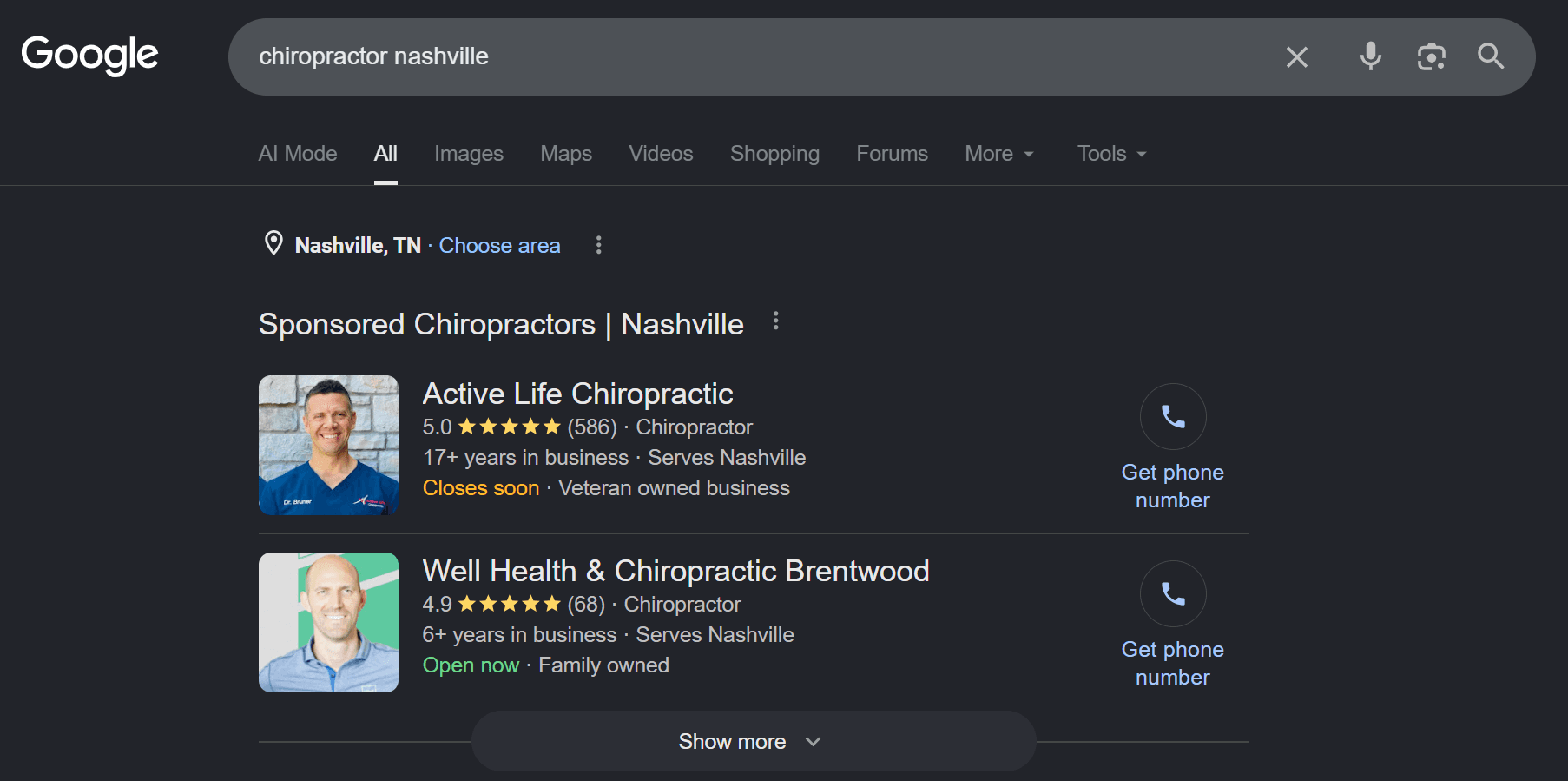
A Google search for 'chiropractor nashville'. Above everything else sits a block headed Sponsored Chiropractors, Nashville, listing Active Life Chiropractic with 5.0 stars from 586 reviews and 17+ years in business, and Well Health and Chiropractic Brentwood with 4.9 stars from 68 reviews, each with a Get phone number button inside the ad.
A real Local Services Ads unit for “chiropractor nashville”. Note the Get phone number button inside the ad: the patient never has to reach a website. This block sits above the map and above every unpaid result.

Why Site Speed Affects New Patients

A slow site loses people before it finishes loading. That part most owners already know.

The part that costs the most is what happens next: Google sees the patient bounce back to the results and treats your page as a poor answer. So a slow site doesn’t just lose that one visitor — it quietly reduces how many ever see you.

Under 2 sec

The load-time standard we build every local page to. Past that, visitors leave before they ever reach your phone number.

Innovative Media Professionals — local page build standard

What a slow site actually costs you

Why it compounds

  1. Your page loads slowly
  2. The patient backs out before it finishes
  3. Google records that they left and came back to search
  4. Google ranks you lower — you look like a bad answer
  5. Fewer patients see you at all

Then it repeats — a slower site keeps feeding Google the same signal.

  • It's an official ranking factor

    Not a theory. Google confirms speed is used in ranking.

  • Google judges your MOBILE site

    Mobile-first indexing — and phones are slower than your desktop.

  • Measured as Core Web Vitals

    Largest Contentful Paint: how long the main content takes to appear.

  • It's a patient experience

    Waiting creates friction. People in pain have less patience, not more.

We don’t chase a perfect 100. A flawless score isn’t the goal and rarely pays for itself. Fixing what genuinely makes people leave does.

Sources: web.devGoogle PageSpeed InsightsSearch Engine Journal

What Improving The Grid Is Worth

Turning gray dots green isn’t a vanity score — it’s the same return math you already run on every campaign. Here it is with real numbers.

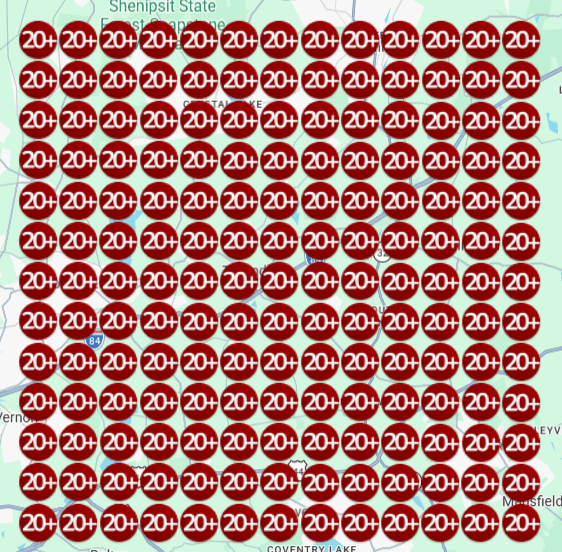
BeforeNot in the top 3 anywhere
GeoGrid scan before the work: a 13 by 13 grid of measurement points covering the whole service area, every single point colored dark red and labeled 20+, meaning the business ranked twentieth or worse everywhere.

Every one of the 169 measured points reads 20+. For a patient searching anywhere in this area, the business may as well not exist.

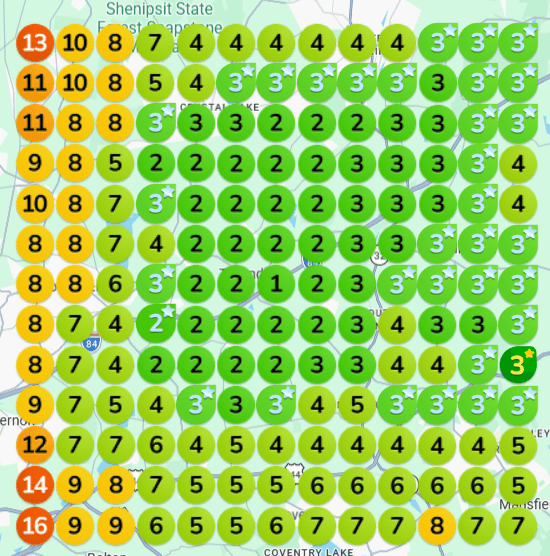
AfterTop 3 across the core
GeoGrid scan after the work: the same 13 by 13 grid, now mostly green. The center of the service area shows rankings of 1, 2 and 3, mid ranks of 4 to 8 toward the west, and the weakest points in the low teens only at the far corners.

Same business, same map, same grid. The center is now 1s, 2s and 3s, fading to single digits at the far edges of the territory.

Real scans of one business, before and after the work — 169 measured points across the same territory. Share of Local Voice is simply how much of that map you own in the top 3. These particular scans are from another local trade, not a chiropractic practice; the map behaves the same way, and the chiropractic-specific numbers are in the cards above.

0% → 37%

Map Pack market share in 8 weeks — 0% at week 0, about 15% by week 4, 37% by week 8, across 169 square miles.

Network case study — mobile mechanic, Nashville

+57% revenue

Revenue up 57% with cost per lead down 74%, over 8 weeks.

Network case study — family-owned electrician

$60,000/yr

What 10 missed calls a month adds up to when a patient is worth $500.

Cost-of-invisibility math

Those first two results come from other local service businesses in our network, not chiropractic — we’d rather show you what we can actually evidence than dress up someone else’s numbers as yours. The published research above applies to local search generally, chiropractic included.

The Trinity: The Three Biggest Signals Google Values

Google and the AI tools check three things before deciding whether to show your practice at all: your Google Business Profile, your schema, and your website. Get all three saying the same thing and you stop being filtered out. Together they form the Authority Foundation of our Clinic Growth Architecture™.

  1. Google Business Profile

    Who you are, where you are, and what you treat. This is the listing that feeds the Map Pack — hours, categories, services, photos, reviews.

  2. Schema

    The structured code on your site that Maps, ChatGPT, Gemini and Grok actually read. Without it they can’t tell what you treat, so they leave you out of the answer.

  3. Website

    Where Google goes to verify the other two are real. If your site disagrees with your listing, or is too slow to check, the whole thing gets discounted.

How practices lose without knowing

  • Your profile says one thing and your website says another — Google can’t confirm which is true, so it quietly filters you out.
  • Your schema is missing or basic — the AI tools can’t read what you treat, so you never appear in the answer.
  • Your site isn’t built for local intent — the patients who do find you leave without booking.

Line all three up and you appear in more of the map, get cited by the AI tools, and take more calls — off the exact same number of searches you already have.

Your free Local Visibility Checkup gives you a score out of 100 and shows how you compare to the leading practices in your city.

The other half

What Local Services Ads actually are

Your profile is the part you earn. Local Services Ads are the part you can buy, and they sit above everything else, including the map. Chiropractic is an eligible category in the United States, so this is available to you.

A phone results screen. Local Services Ads sit at the very top with a verified badge, a paid ad below them, then the map and the three map listings.LOCAL SERVICES ADSGoogle Verifiedyou pay per lead, not per clickSponsoredpaid per click, stops when the budget stops1Call2Call3Calleveryone else starts below this line
A Google search for chiropractor nashville. A block headed Sponsored Chiropractors, Nashville sits above everything else, listing two practices with star ratings, review counts, years in business and a Get phone number button inside each ad.
A real Local Services Ads unit for “chiropractor nashville”. The Get phone number button sits inside the ad, so the patient never has to reach a website at all.

You pay per lead, not per click

A normal Google ad charges you when someone clicks, whether or not they ever contact you. LSA charges when someone actually reaches out. It is the one slot you can buy at the exact moment a patient is trying to book.

The badge is the point

Verified practices show a Google Verified check mark. It lands before the patient has read a single review, which is why it does so much work at the comparison stage.

Worth knowing: Google merged Google Guaranteed, Google Screened and License Verified into this one badge, and discontinued the money-back guarantee that used to come with it. It is a verification signal now, not a refund promise. Anyone still selling you “Google Screened” is working from old information.

Health care cannot jump the queue

Some trades can run ads while their verification is still processing. Health care is specifically excluded, so your ads do not run until you are fully verified.

Which means the paperwork is the timeline. Start it early or the ads sit idle.

What Google checks before you can run one

Seven separate checks, which is exactly why the badge carries weight with patients.

  • State license for the practice
  • State license for each provider
  • Business registration
  • Insurance verification
  • Background check on the business
  • Background check on the owner
  • Google's own review of the profile

Eligibility, badge changes and screening requirements from Google Local Services Help. We have deliberately not quoted a cost per lead here: the figures circulating online are home services numbers, and pricing a clinic off a plumber’s data would be guesswork.

How the two work together

The profile is the asset. It keeps working whether or not you top up a budget, it carries your reviews, and it is what the AI tools quote. It is slow to build and hard for a competitor to take.

The ads are the tap. They turn on this week and off next week. They buy the moment of highest intent, and they stop the day you stop paying.

Run only the ads and you rent your patient flow forever. Run only the profile and you give away the searches happening while you are still climbing. Most practices need both, weighted differently depending on how far along the profile already is.

The mechanism

This is an algorithm, not an opinion

Most of what gets sold as local SEO is asserted rather than explained. Google has patented its methods for ranking local businesses, and those documents are public. You can open all three and read them yourself. Here is what they describe and what each one means for a practice.

US8046371B2Granted 2011 · Expired 2025

Being closest does not win. Being best-documented does.

Scoring local search results based on location prominence

The method scores a business on how much of the web independently refers to it: the authority of the documents that mention it, how many documents refer to it, how many carry reviews, and how many simply mention it in passing. That score is applied separately from distance, which is why a practice further away can outrank one nearer to the searcher.

Read the patent
US8312010B1Granted 2012 · Expired 2024

What people do on the map counts, not just what they type.

Local business ranking using mapping information

The method weights different signals differently, and it gives the heaviest weight to actions taken on the map itself rather than to the search wording.

Signals corresponding to user actions on a map (e.g., request for directions to a business, request to call a business, etc.) can be given an even larger weight
Read the patent
US8538973B1Granted 2013 · Expired

A request for directions works like a vote.

Directions-based ranking of places returned by local search queries

The method reads directions query logs and matches each one to the place at the destination address, which then receives a vote. Places people actually navigate to rank higher for later searches.

Read the patent

What this does and does not prove

It proves the mechanism is real. Web mentions, reviews, direction requests and calls are described, in Google’s own filings, as inputs to local ranking. That is not an agency theory, and it is why the work is what it is.

It does not prove this is today’s live algorithm. All three patents have expired, and Google has never confirmed which systems it runs in production. Anyone telling you a patent is the current algorithm is overselling it. Treat these as the documented approach, not a spec sheet.

Which is exactly why we measure instead of assume. The grid shows what is actually happening in your city right now, whatever the algorithm is doing this month.

Why a GeoGrid

“You rank number three” is not a real answer

Rank third from where? Google decides local results partly on how far the searcher is from you, so your position changes as the person moves. Checking one spot, usually the clinic’s own address, is the most flattering possible place to measure and tells you almost nothing about the rest of your city.

Relevance

How well a profile matches what someone is searching for.

Your categories, services and conditions have to actually say what you treat.

Distance

How far each result is from the searcher's location.

This is measured from the person, not from your clinic. It is why your rank changes street by street, and why one number cannot describe it.

This is the one that breaks single-point rank checking.

Prominence

How well known a business is, online and off.

Reviews, citations and the rest of the web agreeing about who you are.

Relevance, distance and prominence are Google’s own three stated local ranking factors. Google Business Profile Help

What the grid actually does

A seven by seven grid of search points. The practice ranks in the top three only near its own location in the center, and falls to twentieth and worse toward the edges.18141191216201596471117116323813942125111273249141612859131820171311141921

We drop a grid of points across your service area and run the same search from every one of them, as if a patient were standing there. Each point returns your real position for that spot.

  • Average rank position

    Your average across every point on the grid, not your best one.

  • Coverage

    The share of your service area where you appear at all. This is the number that shows how much of your city cannot find you.

  • Re-scanned over time

    The same grid, the same keywords, repeated, so progress is measured against the identical yardstick rather than a new screenshot each month.

Why the fade is normal

Almost every practice is strongest at its own front door and fades with distance. That gradient is the default state, not a punishment. It is simply what happens when nothing has been done to earn visibility further out.

Which means the useful question is never “what is my rank”. It is how far from my front door does my visibility survive, and which neighborhoods belong to somebody else.

A practice can sit at number one on its own address and be invisible three miles away, where most of its potential patients actually live. Both facts are true at the same time. Only one of them shows up in a single rank check.

Population density

The same five mile radius is a different business in a different city

How far your visibility needs to reach depends on how many people live inside that reach. Two metros of almost identical size, with almost the same number of chiropractors, produce completely different maps.

Two identical five mile circles side by side. The dense market circle holds roughly two and a half times more people than the spread-out market circle.dense marketspread marketsame 5 mile radiussame 5 mile radius
Las Vegas and Nashville metro areas compared on population, density, counties, chiropractic offices and people within a five mile radius.
MeasureLas VegasNashville
Metro populationClose enough that the headline numbers look interchangeable.2.40m2.15m
Metro densityNashville is actually denser here. This is the number that misleads people.304 / sq mi341 / sq mi
Counties in the metroLas Vegas metro is a single county. Nashville metro is spread across fourteen.114
Urban area densityMeasured where people actually live, Las Vegas is about 2.6 times denser.5,282 / sq mi2,055 / sq mi
Chiropractic offices with staffAlmost identical. The competition gap is geography, not headcount.242250
People within a 5 mile radiusOur estimate from published urban densities, assuming even spread.~400,000~160,000

What this means in a dense market

In Las Vegas the people are stacked close together, so a small radius already holds a lot of patients. The fight is intensity: many practices competing over the same few square miles, and losing a couple of miles of coverage costs you a large number of people.

What it means in a spread market

In Nashville the same patients are spread across a far wider area and fourteen counties. The fight is reach: you have to stay visible much further out to see the same number of people, and a single rank check near your clinic hides how much of that area you are missing.

Population, density, land area and county counts from the US Census Bureau and Census Reporter (ACS 2024). Chiropractic office counts from the Bureau of Labor Statistics, Quarterly Census of Employment and Wages, NAICS 621310 (2024), which counts only practices with staff on payroll, so solo practices push both totals higher. The five mile figures are our own estimate from published urban densities and assume people are spread evenly, so real neighborhood counts vary.

What a position is worth

What owning the top three is worth in patients

There is no invoice for a Map Pack position, so this works it out from the bottom up: searches, then clicks, then inquiries, then patients, then what a patient is worth to you. Change any number to your own. The two at the bottom are yours — we have no benchmark for them and will not pretend otherwise.

Three map positions on the left with a price tag on the right, showing that an unpaid position can be priced by what the same clicks would cost in ads.123what youwould havepaid in ads

Your numbers

Your numbers, not benchmarks

No verified chiropractic figure exists for either of these, so they start neutral. Put your real ones in.

We first remove 68% of searches, because that share ends without anyone clicking anything at all. Skipping that step is how these estimates get inflated.

Estimated monthly clicks, inquiries and ad-equivalent value by Map Pack position.
Map Pack positionClicks / moInquiries / moYou would have paid
1stabout 17.6%688$322
2ndabout 15.4%597$281
3rdabout 15.1%587$276

Per search term. You are working out one term.

Owning the top three, every month

9 new patients

$11,020 a month · $132,242 a year

23 inquiries a month across that term, at your 40% conversion and $1,200 a patient. An estimate built from your numbers, not a promise — the inputs above are what make it yours.

The floor, for comparison

$879 a month

That is what the same clicks would cost you in Google Ads — about $10,550 a year you would be renting instead of owning. It is the cheapest possible way to value the position, because it prices the click and not the patient.

Map Pack click shares of about 17.6%, 15.4% and 15.1% come from a First Page Sage meta-analysis, not from Google, so treat them as estimates. Cost per click and conversion defaults are the 2026 WordStream benchmark for doctors and surgeons across 13,474 US campaigns. The 68% no-click share is US panel data. Search volumes from Google’s own Keyword Planner are rounded and averaged over twelve months, so every figure here is an estimate.

The other side

What not showing up is quietly costing you

None of this appears on a report. There is no line item for the patient who chose someone else before they had ever heard of you, which is exactly why it runs for years without anyone noticing.

  • Appointments that never get booked

    The patient found a practice. It was not yours, and you have no record of the search happening at all.

  • Calls that go to whoever is in the top three

    At the moment someone is ready to book, the Call button sits next to three names. If you are the fourth, you are not in that decision.

  • The neighborhoods you quietly do not serve

    Your visibility fades with distance from your front door. There are streets in your own city where you simply do not come up, and nothing tells you which ones.

  • A competitor becoming the default name

    Show up first often enough and you stop being a search result and start being the practice people already have in mind. That works the other way too.

The checkup below is how you find out which of these is actually happening to you, rather than guessing.

Documented results

What this looks like in a real practice

Client names and locations are withheld. Both campaigns below ran in healthcare, and the numbers come from the campaign dashboards rather than from a brochure. Where a result was recorded as an outcome and not a figure, it is written as a sentence instead of being dressed up as a percentage.

Multi-provider integrated medical practiceUnited States

Share of local voice on its main service went from 15% to 77%

The practice had good months and dead months with no way to predict which was coming. Front desk staffing, provider schedules and cash flow were all being planned around a number nobody could forecast.

Measured on the same 13 by 13 grid at one mile spacing, five months apart. Share of local voice is the percentage of that grid where the practice appears at all, so it is a measure of how much of the city can find them, not a single flattering rank check taken at the front door.

  • 15% to 77%

    share of local voice on its main service term, a 413% increase, with average rank improving from 6.83 to 2.67

  • 9% to 37%

    on a second service term, a 311% increase, average rank 10.51 to 4.40

  • +46.2%

    profile interactions and +50.6% calls across the same five months

The one that is still in progress

A third service term went from 0% to 7% of the grid. That is a 700% increase and it is also still only 7%, which is what an early-stage term looks like before the work compounds. It is included because leaving it out would make the other two look like the normal speed.

Optometry and eyecare practiceGulf Coast metro

All three Map Pack positions, held

The owner was openly skeptical of marketing companies and had been sold before. Seven weeks in, the report showed 700% growth on the practice's main target keyword.

The practice went on to hold all three Map Pack positions for its primary search, which is the local search equivalent of owning the entire shelf, then extended the same result to secondary keywords.

  • 700%

    growth on the primary target keyword

  • 3 of 3

    Map Pack positions captured, in under 3 months

  • 7 weeks

    to monopolize the primary search

The same playbook, other markets

These campaigns ran in other local service categories, not in healthcare. The industry and the client are withheld, but the numbers are untouched and the mechanism is identical: own the map for the searches that carry intent. They are here to show what winning the map does to a business, not to suggest a clinic produced them.

  • $746,635

    in job revenue in a single month

    A 223.74% jump over the same month the year before, off market-wide Map Pack visibility.

    California

  • Top 3

    in Google Maps in under 8 weeks

    After 10 years of trying to crack Google. Biggest revenue month in company history, and the business later sold.

    Connecticut

  • +57%

    revenue in 8 weeks

    $709,505 in additional revenue, cost per lead down 74%, average grid position from 8.2 to 2.4.

  • 0% to 37%

    share of local voice in 8 weeks

    From no Map Pack presence beyond 2 miles to 37% share across 169 square miles.

    Nashville

  • 89

    unfair 1-star reviews removed

    Then Map Pack visibility taken across all four locations, owning the high-intent searches in the market.

  • 3x

    Google Maps visibility in under 4 months

    In one of the most cutthroat local categories there is, against entrenched competitors.

  • +640%

    market share, then a second location

    A brand-new business in a saturated market hit dominant rankings and opened a second site within 5 months.

    Las Vegas

  • +400%

    visibility in week one

    Category fixes, 30+ photos and 12 reviews in 5 days produced a 400% market share jump immediately.

    Phoenix

Results vary by market, by how competitive your category already is, and by how much of the work actually gets completed. These are real campaigns, not a promise of the same outcome.

A Complete Local Patient Engine, Built And Managed For You

We act as the general contractor for your marketing — aligning the three levers so your growth doesn’t depend on any single ad campaign.

What we handle for you

  • Optimize your Google Business Profile and Maps presence
  • Resolve the technical issues slowing your site down
  • A review strategy that grows 5-star reviews steadily
  • Local Services Ads setup and ongoing optimization
  • A monthly plain-English report: calls, forms, and estimated patient value

Simple, flat pricing

Implementation
One-time setup
Ongoing Optimization
Flat monthly — no per-lead fees

Both are quoted per practice once we have seen your checkup, so you are pricing the actual work rather than a package you may not need.

Our commitment: if your Maps visibility score hasn’t improved in the first 90 days, we keep working at no additional cost until it does. You get the numbers in plain English every month, so you always know what came in and what it cost.